


Why Is My Car Paint Peeling? Causes, Fixes and How to Stop It Spreading
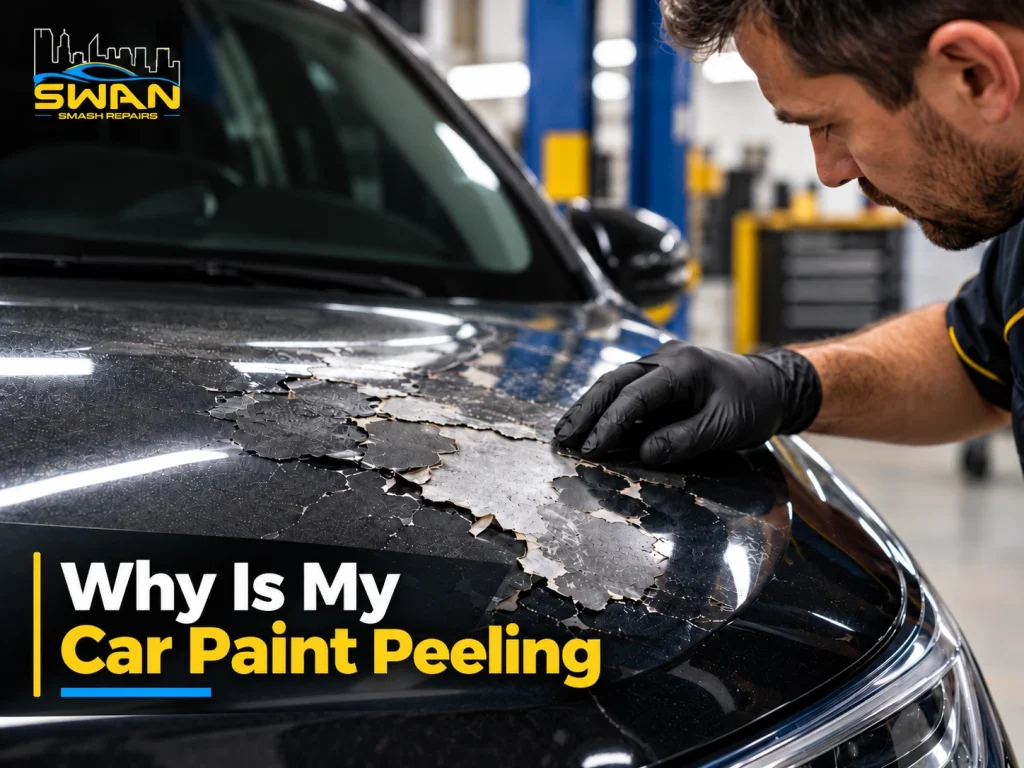
If you’re wondering why your car paint is peeling, the short answer is that one of your paint layers has lost its grip on the layer underneath. Most of the time it’s the clear coat letting go after years of UV exposure. A poor previous respray, stone chips that let moisture in, harsh washing and plain old age can all cause it too.
The right fix depends on which layer is failing and how far the damage has spread. Get that wrong, and you’ll pay for the same panel twice.
Below, our team explains each cause, the repair that actually lasts, and how to protect your paint in Perth conditions.
What Causes Car Paint to Peel, and How Can You Fix It?
Factory paint is built in layers, and each one has a job:
- Primer → bonds the paint system to the metal or plastic panel
- Base coat → gives your car its colour
- Clear coat → the hard, glossy shield protecting the colour from UV, chemicals and light scratches
When a car comes into our workshop in Welshpool with peeling paint, the first thing we check is where the bond broke. This table shows how the clues point to the cause.
| What you can see | Layer that’s failing | Most likely cause | What usually fixes it |
| Dull, chalky or milky patches, no flaking | Clear coat (oxidation only) | UV and heat | Machine polishing, if enough clear remains |
| Fine hairline cracks spreading in a crazed pattern | Clear coat turning brittle | Age and heat cycles | Refinishing before it starts lifting |
| Thin clear film flaking off dull colour | Clear coat delamination | Sun damage or ageing | Sanding back and refinishing the panel |
| Colour lifting to show grey or white | Base coat or primer adhesion | Poor prep, previous respray or factory fault | Stripping to a stable layer, priming and repainting |
| Bubbles with orange or brown edges | Under the primer | Rust spreading from chips | Treating corrosion, then refinishing |
| Peeling that stops sharply at a panel edge | Between old and new paint | A previous repair | Removing the failed repair and redoing it |
Oxidation and peeling are not the same thing. Oxidised paint can often be polished back. Once the clear coat physically lifts, no polish can reattach it.
1. UV Exposure and Prolonged Sun Damage
Perth’s summer UV regularly hits the extreme range, which the Bureau of Meteorology’s Perth UV forecast rates as 11 and above.
Over time, UV breaks down the resins in the clear coat. This is called photodegradation. The clear turns brittle, loses gloss and eventually separates from the base coat.
Horizontal panels cop the most sun, so the bonnet, roof and boot lid usually fail first. Watch for faded colour, cloudy patches and small flakes along panel edges.
How to Fix Paint Peeling Caused by Sun Damage
If the clear is cloudy but still intact, machine polishing can remove the oxidised surface and restore some gloss.
Once it’s flaking, polishing won’t save it. The failed clear coat needs sanding off, and the panel needs refinishing with fresh base coat and clear.
2. Poor Surface Preparation or a Previous Bad Respray
Paint only bonds as well as the surface beneath it. Poor sanding, leftover grease or silicone, incompatible products or rushed application all stop new paint from properly adhering.
Peeling that appears within a year or two of a repaint often points here, especially when it stops in a sharp line. If you bought the car second-hand, the signs of previous body repairs can show whether that panel has been painted before.
How to Fix Peeling Caused by Poor Previous Paintwork
Spraying another coat over the top just traps the problem. The unstable layers have to come off until we reach firmly bonded paint, then the panel is prepped, primed and refinished.
Professional spray painting in a controlled booth gives each coat the clean conditions it needs to cure properly. How much gets stripped depends on how far the failure has spread.
In WA, motor vehicle repair businesses must hold a licence, and Consumer Protection WA recommends checking for one before you book any repair.
3. Scratches, Stone Chips and Moisture Getting Under the Paint
Stone chips from freeway driving, car park scrapes and minor bumps can cut through every layer. Once that happens, the damage follows a predictable path:
Moisture gets in → bare metal corrodes → rust spreads and pushes paint up from below.
Salt air in coastal suburbs speeds this up. Clear coat peeling looks like a thin, see-through film lifting away. Rust-related lifting shows bubbles, cracking and brown staining around the edges.
How to Fix Peeling Caused by Physical Damage or Rust
Small chips caught early can be cleaned and filled with matched touch up paint. You’ll need to find your car’s paint code for an accurate colour.
If paint is already bubbling, the area must be cut back to clean metal, the corrosion treated, then primed and repainted. Painting over rust only hides it for a few months.
4. Harsh Cleaning Products and Aggressive Washing
Dishwashing liquid, household degreasers and scourers strip protection and slowly wear the clear coat thin. A pressure washer held too close can catch a chipped edge and tear off a whole strip.
Bird droppings, tree sap and bug residue are acidic. Left to bake on hot paint, they can etch the clear coat and start the breakdown that leads to peeling.
How to Fix Paint Damage Caused by Harsh Washing or Contaminants
Switch to a pH-neutral car shampoo and a soft microfibre mitt. Light etching and staining can often be polished out.
Lifted paint won’t reattach, though. Gentler washing stops further damage, but the peeling area still needs proper refinishing.
5. Ageing Paint and Repeated Temperature Changes
Every paint finish has a lifespan. Hot afternoons and cooler nights make panels expand and contract, which gradually stresses a clear coat that’s already brittle.
Older cars tend to show crazing (fine surface cracks), rough patches, lost gloss and peeling across several panels at once.
How to Fix Peeling Caused by Ageing Paint
The damaged layers are sanded back, and each affected panel is refinished. When several panels are failing, a fuller respray usually gives a more even colour match than patching one panel at a time.
Wax, polish or aerosol clear over loose paint won’t restore a failed coating. That’s why DIY paint jobs rarely last on a peeling panel.
6. Factory Paint Defects or Premature Adhesion Failure
Occasionally paint fails early because of a manufacturing fault, such as primer separating from the electrocoat applied at the factory. The usual clue is peeling on a fairly new car, across several panels, with no accident or repair history.
Age alone doesn’t prove a defect. Manufacturers will consider damage, environmental exposure and previous repairs before accepting a claim.
How to Fix Peeling Caused by a Possible Factory Defect
Have the paintwork assessed and photographed first. Then check your manufacturer’s warranty and your rights under the ACCC’s guidance on new and second-hand cars.
If no warranty remedy applies, the affected layers need a proper professional refinish.
Faded paint, failed clear coat, lifting colour and hidden rust each need a different repair. Pinpointing why your car paint is peeling is what keeps the fix from failing again.
Expert Tips to Prevent Car Paint Peeling
Gentle cleaning, less direct sun and early chip repairs will keep your finish healthy for much longer. No routine stops every type of paint failure, but these habits make a real difference in Perth:
- Park undercover: A garage, carport or quality car cover blocks more UV than any product can.
- Wash the right way: Use car shampoo, a soft mitt and two buckets, never household detergent.
- Remove contaminants within a day: Bird droppings and sap do the most damage in summer heat.
- Keep the pressure washer back: Never aim it at chips or lifting edges.
- Fix chips early: A small touch up now costs far less than rust repair later.
Protection products help too. Wax, sealant or ceramic coating applied to healthy paint gives the clear coat an extra UV barrier. After each wash, take a minute to look for cloudy patches, bubbling or new flaking edges.
Keep in mind that prevention only protects paint that’s still sound. Once the clear coat has failed, better maintenance can’t reverse it.
Get Peeling Car Paint Repaired by Swan Smash Repairs
Peeling paint makes a car look older than it is and leaves the layers underneath exposed. The sooner it’s assessed, the smaller the repair usually is.
Swan Smash Repairs is a family owned, MTA certified body repairer that has served Perth drivers since 1988. As an authorised PPG refinisher, we use PPG refinishes exclusively for our spray painting, and all repairs carry our lifetime warranty (conditions apply).
We’ll inspect your paintwork, explain which layer has failed, and recommend either a panel refinish or our full car respray service.
FAQs
Does car insurance cover peeling clear coat?
Generally no. Insurers classify sun damage, ageing and clear coat failure as wear and tear. Peeling caused by a specific event like hail or chemical splash may qualify.
Is it worth fixing peeling paint on an old car?
It depends on the car’s value and your plans. Fixing early stops rust and protects resale value, while purely cosmetic peeling on a low-value car can wait.
Can you wrap or ceramic coat over peeling paint?
Not safely. Coatings won’t bond to failing clear, and wrap adhesive can tear loose paint away later. Repair first, then compare a car wrap or respray.
Should I peel off loose clear coat myself?
Avoid scraping or sanding at home. The base coat underneath is very thin, so DIY removal often exposes primer and turns a clear coat repair into colour repair.
What if my dealer blames bird droppings for peeling paint?
Ask for the assessment in writing, then get an independent inspection. Clean, documented maintenance records strengthen your case if you pursue a warranty or consumer guarantee claim.